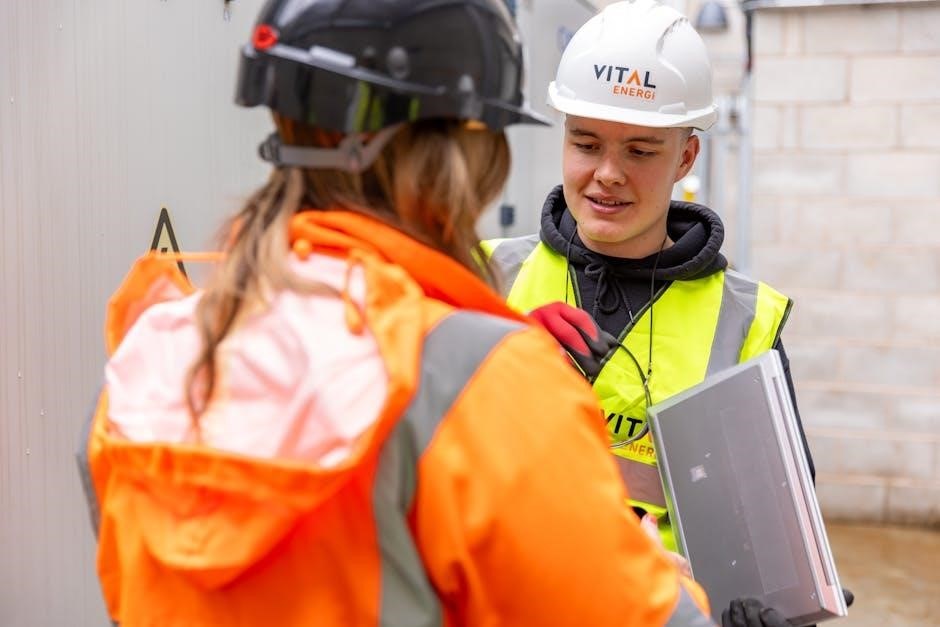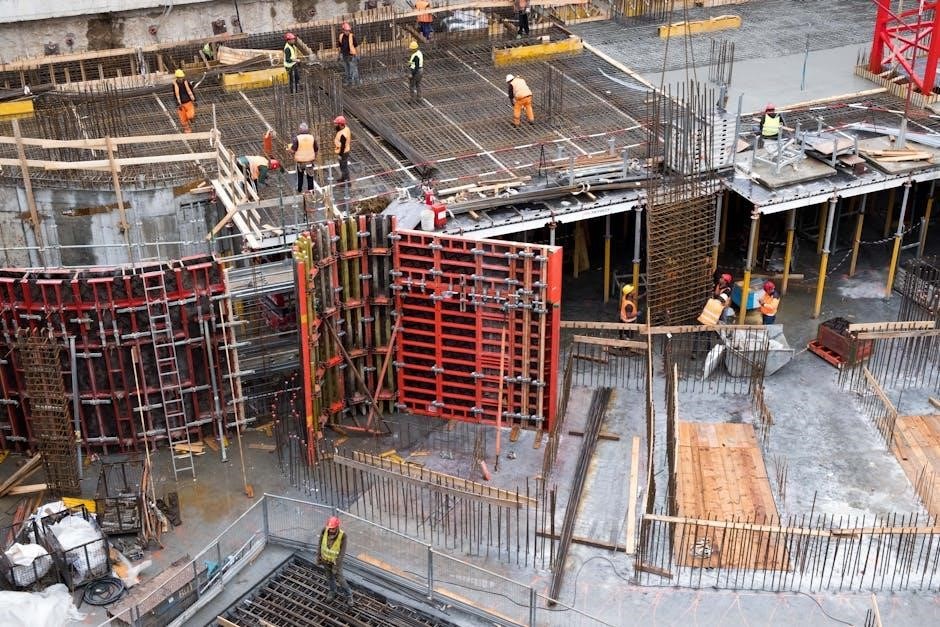
Construction Management is a multifaceted field encompassing planning, organizing, and overseeing construction projects like buildings and infrastructure. The End-of-Pathway Assessment (EOPA) evaluates professional competency in these critical areas, ensuring successful project delivery.
Purpose and Scope of the EOPA Study Guide
This EOPA Study Guide for Construction Management serves as a comprehensive resource designed to equip students and professionals with the knowledge and skills necessary to excel in their End-of-Pathway Assessment. Its primary purpose is to facilitate effective preparation for the exam, ensuring candidates confidently demonstrate proficiency across all vital domains of construction management. The guide aims to help users master key concepts, understand essential skills, and apply practical insights crucial for success in the field and for obtaining the EOPA certification.
The scope of this study guide is broad, offering a structured learning approach. It provides a detailed overview of core principles and practices, from foundational concepts to advanced techniques. Topics covered include essential skills, project management methodologies, and critical aspects of legal compliance relevant to the industry. Furthermore, it incorporates practical strategies and self-assessment exercises, allowing individuals to gauge understanding and reinforce learning. By offering detailed explanations and a systematic instructional path, the guide ensures thorough preparation for the EOPA examination, serving as a benchmark for competency.
Overview of Construction Management Field
Construction management is a dynamic and multifaceted discipline central to the successful delivery of built environment projects. It encompasses the comprehensive planning, organizing, leading, and controlling of resources and processes required for the construction of buildings, infrastructure, and various other ventures. Professionals in this field are tasked with coordinating diverse aspects, including intricate design specifications, rigorous budgeting constraints, complex scheduling logistics, and paramount safety protocols. The ultimate goal is to ensure that projects are executed efficiently, completed punctually, remain within established financial parameters, and adhere strictly to all stipulated quality standards. This discipline demands a foundational understanding of project management principles, which Construction Management Institutes (CMIs) universally acknowledge as invaluable for career progression. It involves orchestrating numerous stakeholders, such as architects, engineers, contractors, and subcontractors, from a project’s initiation through its completion, ensuring seamless integration and collaboration. This systematic approach is crucial for achieving specific project objectives, making construction management a critical component of the global economy and a challenging yet rewarding career path for those dedicated to shaping the physical world around us.

Fundamental Concepts of Construction Management
Effective construction management relies on core concepts. These include systematic project life cycle management, comprehensive risk mitigation, and stringent quality control. Mastering these fundamentals is crucial for successful project outcomes and excelling in the EOPA exam.
Project Life Cycle Management
Construction management fundamentally relies on a structured project life cycle, encompassing all phases from initial concept to successful completion. This systematic approach ensures efficient goal achievement. The process begins with meticulous planning, defining clear project objectives, scope, and developing a comprehensive schedule. It also involves identifying potential risks and allocating necessary resources, acting as the crucial roadmap for execution.
Following planning, organizing establishes the project structure by defining roles, assigning tasks, and coordinating resources like materials and equipment. This ensures seamless integration. Leading then motivates and inspires the project team, fostering collaboration, setting clear expectations, and resolving conflicts to enhance productivity and morale. Finally, controlling continuously monitors project progress, tracks costs, schedules, and quality, and identifies deviations from the plan. Corrective actions are implemented promptly to keep the project on track, within budget, and meeting quality standards. This iterative management process, covering planning, organizing, leading, and controlling, is essential for navigating the complexities of construction projects and is a primary focus for the EOPA exam.
Hierarchical Management Structures
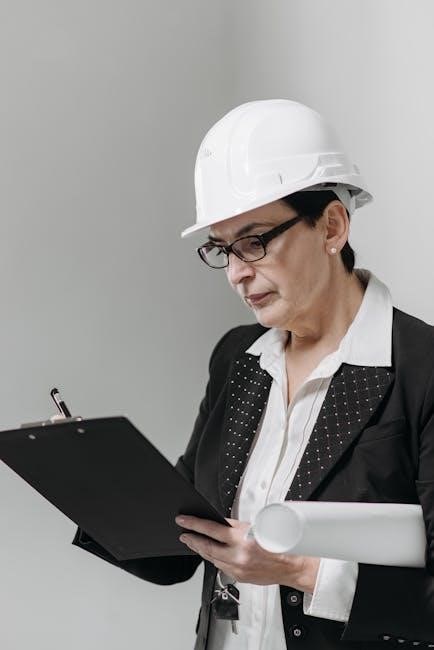
Construction projects rely on distinct hierarchical management structures, ensuring clear authority and responsibility for efficient coordination and decision-making. At the top, top management sets strategic direction, long-term objectives, and key policies for the project portfolio. Their focus is on the broad vision and major resource acquisition.
Next, middle management translates strategic goals into actionable project plans, overseeing execution. This level manages resource allocation, facilitates inter-departmental coordination, reports progress. Their oversight ensures milestones align with objectives.
Lastly, supervisory management directly oversees daily operations and the on-site workforce. This level handles task assignments, monitors work quality, enforces safety procedures, and addresses immediate issues. Understanding these distinct levels—top, middle, and supervisory—and their interdependent functions is paramount for navigating construction complexities. This structural clarity is fundamental for successful project outcomes and a core EOPA concept.

Core Project Management Aspects
This section explores essential construction project management components: planning, scheduling, cost estimation, quality control, and contract administration. These are crucial for delivering projects on time, within budget, and to standards, vital for EOPA success.
Project Planning and Scheduling Techniques
Project planning and scheduling are foundational for effective construction project management, serving as the roadmap for successful execution. This crucial phase begins with defining clear project objectives, establishing a precise scope of work, and identifying key deliverables. A comprehensive plan then details strategies for achieving these goals, outlining necessary tasks, their dependencies, and the resources required. Effective planning also involves anticipating potential risks and developing proactive mitigation strategies, alongside securing permits and approvals. It is paramount to allocate resources efficiently and establish robust communication protocols to ensure alignment towards common project goals.
Following meticulous planning, scheduling techniques transform the plan into a timeline, ensuring timely completion of project phases and optimizing resource utilization. Common methods include Gantt charts, which visually represent timelines and task durations, and critical path analysis (CPA), identifying the sequence of activities determining the shortest possible project duration. Network diagrams further illustrate task relationships and dependencies, aiding complex project sequencing. Mastery of these scheduling tools is vital, as the EOPA exam frequently assesses a candidate’s understanding and practical application of techniques in real-world construction scenarios, aiming to minimize delays and enhance overall project efficiency.
Cost Estimation and Budgeting
Accurate cost estimation and meticulous budgeting are paramount for ensuring the financial viability and overall success of any construction project. This critical process involves a thorough analysis of all project requirements, including detailed assessments of material costs, labor expenses, and equipment utilization. By systematically breaking down these components, a comprehensive budget can be developed to guide financial decisions throughout the project lifecycle. Various robust cost estimation techniques are employed, such as parametric estimating, which uses historical data from similar projects; analogy estimating, drawing comparisons to past projects; and bottom-up estimating, which involves a detailed breakdown of every single task and its associated costs. These methods provide a structured approach to forecasting expenses.

Budgeting extends beyond initial estimates, encompassing the strategic allocation of funds for diverse project activities. It necessitates continuous monitoring of expenses against the established budget to identify any deviations promptly. A key aspect of effective budgeting is the proactive management of potential cost overruns, which can significantly impact project profitability and completion. Professionals must be adept at tracking expenditures, forecasting future costs, and implementing corrective financial actions when necessary. The EOPA exam specifically assesses a candidate’s proficiency in performing accurate cost estimations, creating detailed project budgets, and effectively analyzing financial data to support sound decision-making and ensure fiscal responsibility in construction management.
Quality Control and Assurance
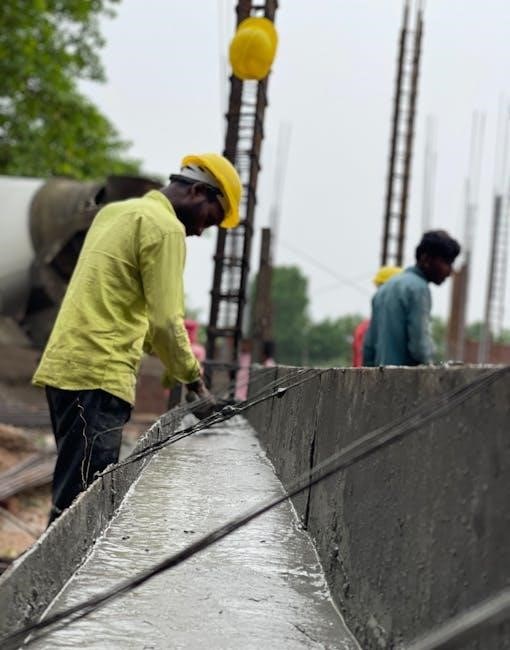
Quality control is absolutely crucial in construction to guarantee that projects consistently meet specified standards and deliver the desired, high-quality outcomes. This fundamental aspect of project management involves the meticulous implementation of rigorous procedures and systematic processes designed to monitor and verify the quality of all components. This includes careful scrutiny of materials used, the standard of workmanship applied by all personnel, and the effectiveness of the construction processes themselves. Key techniques employed to achieve this include comprehensive inspections at various project stages, thorough testing of materials and systems to ensure compliance with specifications, and detailed documentation of all quality-related activities and findings. These measures collectively ensure adherence to established benchmarks.
The EOPA exam for Construction Management places significant emphasis on a candidate’s understanding of quality control and assurance. It often covers essential topics such as the development and implementation of robust quality control plans, outlining the steps and responsibilities for maintaining quality throughout a project. Furthermore, it assesses knowledge of effective inspection procedures, ensuring that candidates can identify defects and non-conformities. Familiarity with various quality management tools and methodologies is also vital, as these enable construction managers to proactively maintain and improve project quality, ultimately leading to successful and compliant project delivery, meeting client expectations and industry regulations.
Contract Management and Administration
Effective contract management and administration are absolutely essential in construction projects to ensure clear understanding and strict adherence to all project agreements. This critical process begins with the thorough review and strategic negotiation of contract terms, setting the foundational expectations for all parties involved. It extends through the entire project lifecycle, requiring diligent management of contract changes, amendments, and variations that inevitably arise during construction. A key responsibility is also the proactive resolution of disputes, claims, and conflicts that may emerge, minimizing their impact on project timelines and budgets. This systematic approach ensures legal compliance, mitigates financial risks, and safeguards the interests of all stakeholders, from clients to subcontractors.
The EOPA exam for Construction Management places significant emphasis on a candidate’s proficiency in these areas. It assesses the ability to interpret complex contract documents, understand contractual obligations, and manage the administrative aspects efficiently. This includes knowledge of different contract types, such as lump sum, cost-plus, and design-build, and their respective implications. Furthermore, the exam evaluates skills in documenting communications, processing payments, handling warranties, and closing out contracts effectively. Mastery of contract management ensures projects are executed within agreed-upon terms, fostering successful collaborations and preventing costly legal challenges, which are vital for a construction manager’s success.

Construction Safety and Risk Management

Construction safety is paramount, protecting workers and the public. This section covers OSHA standards, site-specific safety procedures, and comprehensive risk management strategies. Crucial for preventing accidents, ensuring compliance, and achieving project success.

OSHA Standards and Regulations
OSHA (Occupational Safety and Health Administration) establishes the foundational standards for workplace safety within the entire construction industry. These crucial regulations are meticulously designed to protect workers and the public from a myriad of hazards encountered on job sites. They encompass a comprehensive spectrum of safety topics, detailing specific requirements for critical areas such as fall protection, the safe erection and use of scaffolding systems, proper excavation techniques, and stringent electrical safety protocols. Furthermore, OSHA standards outline precise safety procedures for diverse construction activities, including working at heights, safe trenching operations, and the appropriate handling of hazardous materials.
For all construction professionals, it is absolutely crucial to be intimately familiar with these detailed standards. This deep understanding is not merely about achieving compliance; it is fundamentally about cultivating and maintaining a truly safe working environment for everyone involved in a project. Adherence to OSHA guidelines significantly minimizes the risk of accidents, injuries, and fatalities. Moreover, a thorough grasp of OSHA standards is indispensable for success in the EOPA exam, demonstrating a candidate’s commitment to industry best practices and legal requirements, and proving their capability to manage safe construction operations effectively.
Site-Specific Safety Procedures
Site-specific safety procedures are absolutely paramount in construction management, forming the bedrock of a secure and productive work environment. These comprehensive practices are meticulously designed to proactively minimize risks and rigorously prevent accidents, tailored to the unique conditions of each project. They encompass a wide array of essential measures, beginning with frequent, regular safety inspections that identify potential hazards before they escalate. Crucially, the mandatory use of appropriate Personal Protective Equipment (PPE), such as hard hats, safety glasses, and high-visibility vests, is strictly enforced for all personnel on site.
Beyond equipment, these procedures dictate the proper and safe handling of all tools and machinery, ensuring that operations are conducted without undue risk. Adherence to established safety protocols, which are often developed after a thorough site-specific risk assessment, is non-negotiable. Effective implementation of these tailored procedures is vital for creating a truly secure work environment and, most importantly, for guaranteeing the overall well-being and health of every worker on a construction site. Understanding and applying these rigorous site-specific safety protocols is a fundamental requirement for the EOPA exam, underscoring its critical role in proficient construction management.
Comprehensive Risk Management Strategies
Risk management is a crucial aspect of construction management, involving a systematic approach to identify, assess, and mitigate potential hazards and uncertainties throughout the project lifecycle. Comprehensive strategies begin with thorough hazard identification, where potential sources of harm or unexpected events are pinpointed. This proactive step involves detailed site surveys, review of project plans, and analysis of historical data. Following identification, a rigorous risk assessment quantifies the likelihood and potential impact of each identified risk. This allows managers to prioritize risks based on their severity and probability.
Once risks are assessed, robust risk control measures and mitigation plans are developed. These strategies aim to eliminate, reduce, transfer, or accept risks. Examples include implementing engineering controls, administrative controls, or providing personal protective equipment. Effective risk management practices are essential, not only for ensuring project safety but also for minimizing costly accidents, avoiding injuries to personnel, and preventing significant financial losses. This proactive approach safeguards project timelines and budgets, ultimately contributing to overall project success. Understanding and applying these strategies is vital for the EOPA exam, highlighting their importance in the construction management field.